
CRM
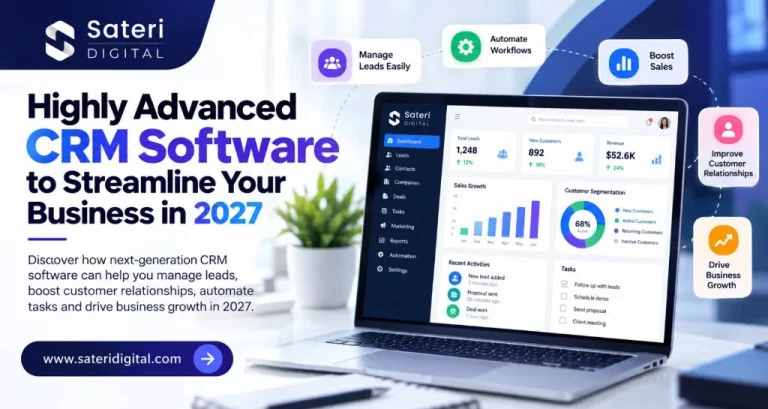
Highly Advanced CRM Software to Streamline Your Business in 2027
Find the best way to choose suitable CRM software to manage your business.
October 2026Architecture patterns for processing millions of events per day with sub-second latency.

Executives expect dashboards that reflect what happened minutes ago — not yesterday’s batch export. Building real-time analytics at enterprise scale means ingesting millions of events per day, joining streams with historical data, and serving sub-second queries to thousands of concurrent users. Here is how modern data teams architect for that reality.
Apache Kafka, Amazon Kinesis, or Azure Event Hubs form the ingestion layer for clickstreams, IoT telemetry, transaction logs, and application metrics. Partition topics by business key, enforce schemas with a registry, and retain windows long enough for replay when pipelines fail.
Use Flink, Spark Structured Streaming, or ksqlDB to aggregate, enrich, and detect anomalies in flight. Define whether you need at-least-once or exactly-once delivery — trading complexity for correctness on financial and operational metrics.
Operational dashboards often combine a hot store (Redis, Druid, ClickHouse, or Pinot) for recent data with a warehouse (Snowflake, BigQuery, Redshift) for historical drill-down. Pre-aggregate common metrics so BI tools and custom UIs do not scan raw event tables on every refresh.
Role-based access, column-level security, and data catalog integration keep sensitive fields out of the wrong dashboards. Lineage tracking helps compliance teams trust the numbers executives present in board meetings.
Monitor lag, consumer offsets, and query p95 latency. Alert when pipelines fall behind peak traffic. Run chaos tests on broker failures so your real-time analytics survive production incidents.
Sateri Digital designs end-to-end data platforms — from ingestion to executive dashboards — for retail, healthcare, telecom, and manufacturing clients. See our data and analytics solutions or book a architecture workshop with our engineering team.
Common questions readers ask before planning implementation.
Start with a gap assessment against your current architecture, team capacity, and business goals. Prioritize one high-impact use case, validate outcomes, then scale in phases.
Most teams can identify early performance and workflow gains within the first 6 to 10 weeks when roadmap, ownership, and metrics are defined up front.
Track baseline metrics tied to business value: delivery speed, quality, operating cost, and user satisfaction. Use those metrics to guide scope and optimization decisions.
Yes. Security, compliance, and audit controls can be embedded into architecture and delivery practices from day one to support healthcare, finance, and other regulated domains.
Find the best way to choose suitable CRM software to manage your business.
October 2026
Legacy infrastructure costs, scaling bottlenecks, and compliance gaps — when to make the move.
March 2026
How to move from demos to production-grade ML systems that deliver measurable ROI.
February 2026