
CRM
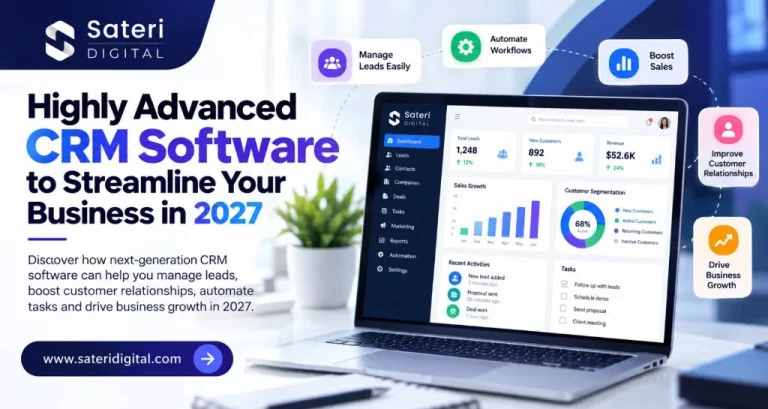
Highly Advanced CRM Software to Streamline Your Business in 2027
Find the best way to choose suitable CRM software to manage your business.
October 2026How to move from demos to production-grade ML systems that deliver measurable ROI.

Most enterprises have run an AI proof of concept. Far fewer have shipped a model that runs reliably in production, earns stakeholder trust, and delivers measurable return on investment. The gap between a compelling demo and a production-grade machine learning system is where AI adoption programs succeed or stall.
POCs often use clean sample data, skip integration with legacy systems, and lack monitoring for model drift. Without MLOps pipelines, data governance, and clear success metrics, pilots never graduate to business-critical workflows. Executive sponsors lose patience when ROI remains theoretical.
Start with a business problem: reduce invoice processing time by 40%, improve demand forecasting accuracy, or automate tier-one support triage. Tie each initiative to a KPI your CFO and operations leaders already track. This keeps AI adoption aligned with enterprise strategy — not technology for its own sake.
Production AI needs reliable data pipelines, feature stores, and access controls. Invest in data quality, labeling workflows, and lineage tracking before scaling model complexity. Teams that skip this step spend months debugging silent failures in production.
Version your models, automate retraining, and monitor inference latency and accuracy in real time. Containerized deployment on Kubernetes or managed ML services (SageMaker, Azure ML, Vertex AI) gives you rollback paths when models degrade. Human-in-the-loop review keeps high-stakes decisions accountable.
Track time saved, error reduction, revenue uplift, and customer satisfaction alongside technical metrics. Quarterly business reviews should show AI adoption moving the needle — not just model accuracy on a holdout set.
Sateri Digital helps enterprises move from AI experimentation to governed, scalable systems. Our teams design MLOps architecture, integrate with ERP and CRM platforms, and train your staff to own the roadmap. Explore our AI solutions or request a production readiness review.
Common questions readers ask before planning implementation.
Start with a gap assessment against your current architecture, team capacity, and business goals. Prioritize one high-impact use case, validate outcomes, then scale in phases.
Most teams can identify early performance and workflow gains within the first 6 to 10 weeks when roadmap, ownership, and metrics are defined up front.
Track baseline metrics tied to business value: delivery speed, quality, operating cost, and user satisfaction. Use those metrics to guide scope and optimization decisions.
Yes. Security, compliance, and audit controls can be embedded into architecture and delivery practices from day one to support healthcare, finance, and other regulated domains.
Find the best way to choose suitable CRM software to manage your business.
October 2026
Legacy infrastructure costs, scaling bottlenecks, and compliance gaps — when to make the move.
March 2026
Architecture patterns for processing millions of events per day with sub-second latency.
January 2026