
CRM
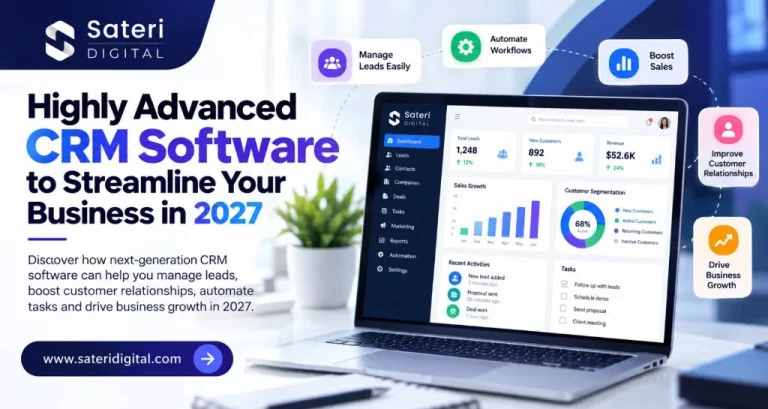
Highly Advanced CRM Software to Streamline Your Business in 2027
Find the best way to choose suitable CRM software to manage your business.
October 2026Legacy infrastructure costs, scaling bottlenecks, and compliance gaps — when to make the move.

Enterprise cloud migration is no longer a question of if — it is a question of when your organization can migrate with confidence. After two decades of helping global teams modernize on AWS, Azure, and Google Cloud, we see the same readiness signals again and again. If you recognize three or more of the signs below, your enterprise is likely ready for a structured cloud migration program.
When data center leases, hardware refresh cycles, and over-provisioned servers consume a growing share of IT budget, cloud economics start to make sense. FinOps planning helps you right-size workloads, reserve capacity intelligently, and shift from capital expenditure to predictable operational spend.
Peak traffic events, seasonal demand, and rapid user growth should not require emergency hardware purchases. Cloud-native auto-scaling, container orchestration, and managed database services remove the ceiling that on-premise infrastructure often imposes on engineering velocity.
Regulated industries need audit trails, encryption at rest and in transit, and identity controls that are difficult to maintain across aging systems. A well-designed landing zone on AWS or Azure gives you policy-as-code, centralized logging, and zero-trust patterns from day one.
If your recovery time objective (RTO) depends on manual runbooks and tape backups, business continuity is at risk. Cloud migration enables automated backups, multi-region failover, and infrastructure-as-code that can rebuild environments in hours — not days.
When developers wait on tickets for environments, patching, and networking changes, innovation stalls. Platform engineering on Kubernetes or managed PaaS services returns focus to building features customers actually pay for.
Begin with a cloud readiness assessment: inventory applications, classify workloads by complexity, and define a phased migration roadmap. Sateri Digital helps enterprises move with zero-downtime cutover strategies, landing zone design, and ongoing FinOps governance. Talk to our cloud architects about your next step.
Common questions readers ask before planning implementation.
Start with a gap assessment against your current architecture, team capacity, and business goals. Prioritize one high-impact use case, validate outcomes, then scale in phases.
Most teams can identify early performance and workflow gains within the first 6 to 10 weeks when roadmap, ownership, and metrics are defined up front.
Track baseline metrics tied to business value: delivery speed, quality, operating cost, and user satisfaction. Use those metrics to guide scope and optimization decisions.
Yes. Security, compliance, and audit controls can be embedded into architecture and delivery practices from day one to support healthcare, finance, and other regulated domains.
Find the best way to choose suitable CRM software to manage your business.
October 2026
How to move from demos to production-grade ML systems that deliver measurable ROI.
February 2026
Architecture patterns for processing millions of events per day with sub-second latency.
January 2026