
CRM
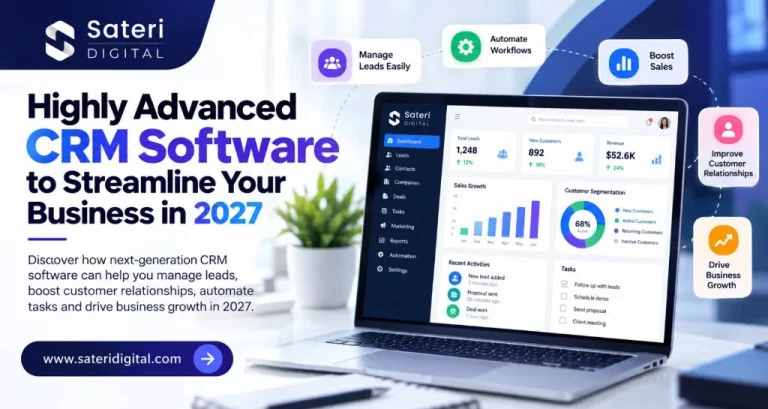
Highly Advanced CRM Software to Streamline Your Business in 2027
Find the best way to choose suitable CRM software to manage your business.
October 2026Why internal developer platforms are becoming essential for engineering velocity.

DevOps broke down the wall between development and operations. Platform engineering goes further: it productizes infrastructure, tooling, and golden paths so application teams ship faster without becoming Kubernetes experts. For enterprises with hundreds of developers, an internal developer platform (IDP) is becoming as essential as source control.
A platform team treats developers as customers. They provide self-service environments, standardized CI/CD templates, observability defaults, and security guardrails baked into every deployment. The goal is not more tickets to ops — it is fewer blockers between commit and production.
Instead of letting every squad invent its own deployment stack, platform engineering offers curated paths: “deploy a Node API to EKS,” “launch a data pipeline on Airflow,” “provision a sandbox with Terraform.” Teams retain flexibility at the edges while the core stays compliant and cost-controlled.
Raw clusters overwhelm most product teams. Platform layers — Backstage, Crossplane, Argo CD, or custom portals — abstract cluster complexity behind APIs developers understand. Infrastructure-as-code and policy engines (OPA, Kyverno) enforce standards without manual review bottlenecks.
Track deployment frequency, lead time for changes, mean time to recovery, and developer satisfaction surveys. Platform engineering justifies its headcount when velocity and reliability metrics improve quarter over quarter.
Organizations with more than 50 engineers, multiple business units, or strict regulatory requirements typically see the highest return. Smaller teams may start with shared templates and graduate to a full IDP as complexity grows.
Sateri Digital helps enterprises design platform engineering roadmaps, implement Kubernetes platforms, and train platform squads for long-term ownership. Explore cloud and platform services or speak with our DevOps leads.
Common questions readers ask before planning implementation.
Start with a gap assessment against your current architecture, team capacity, and business goals. Prioritize one high-impact use case, validate outcomes, then scale in phases.
Most teams can identify early performance and workflow gains within the first 6 to 10 weeks when roadmap, ownership, and metrics are defined up front.
Track baseline metrics tied to business value: delivery speed, quality, operating cost, and user satisfaction. Use those metrics to guide scope and optimization decisions.
Yes. Security, compliance, and audit controls can be embedded into architecture and delivery practices from day one to support healthcare, finance, and other regulated domains.
Find the best way to choose suitable CRM software to manage your business.
October 2026
Legacy infrastructure costs, scaling bottlenecks, and compliance gaps — when to make the move.
March 2026
How to move from demos to production-grade ML systems that deliver measurable ROI.
February 2026